
AMSEC Safe Lock Help
AMSEC Locksmith Service in Montgomery County
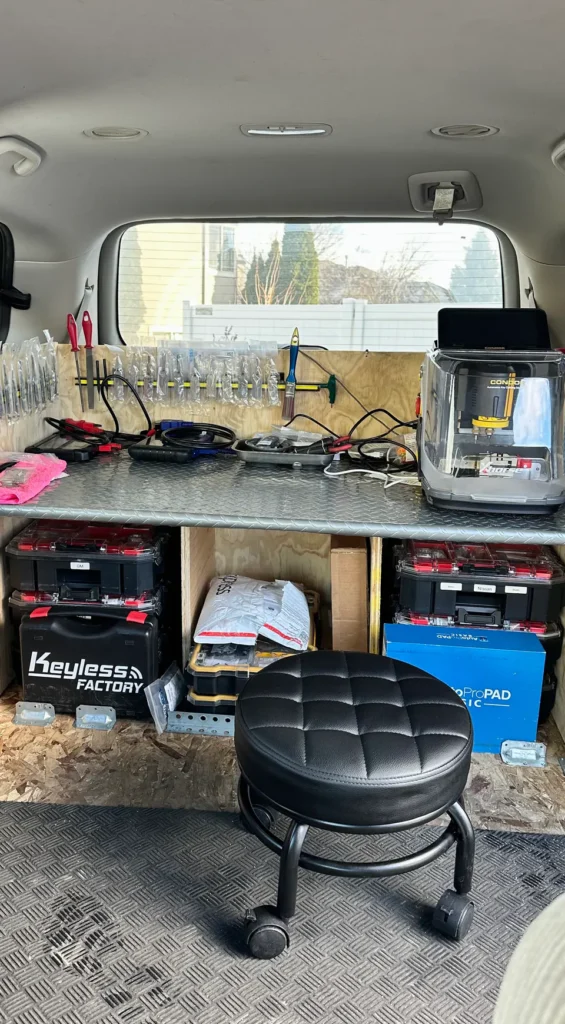
Call (240) 980-1647 for an AMSEC locksmith when your safe will not open, its lock stops responding or a key goes missing. We come to your Montgomery County location for safe opening, lock repair and replacement.
- Mobile service throughout Montgomery County
- Licensed and insured
- English and Spanish
- At least a 6-month warranty on parts and labor
Get a fast quote
AMSEC Locksmith Service Starts With Your Safe’s Lock
AMSEC, short for American Security, makes safes and vault doors for homes and businesses. Its products include home safes, gun safes, commercial safes and depository safes. Depending on the product, access uses a mechanical combination dial, an electronic keypad or a keyed lock. The lock type matters because a missing key, a forgotten combination and a keypad problem require different work.
Tell us whether you have a dial, keypad or keyhole, and describe what happens when you try to open the safe. A lock that accepts its combination while the handle stays stuck presents a different problem from a keypad that gives no response. Our lock rekeying service concerns keyed cylinders; changing a safe’s combination is a separate operation.
AMSEC Safe Access, Keys and Lock Repairs
- Open a locked AMSEC safe — We provide safe opening when a lost key, forgotten combination or lock failure prevents access. Tell us whether the safe is already open or closed so we can identify the access problem before starting.
- Repair a malfunctioning lock — We check the lock’s response alongside the handle and locking mechanism. Resistance at the handle does not identify the lock as the failed part, so the symptoms guide the repair.
- Replace a failed safe lock — A replacement must fit the safe’s mounting arrangement and work with its locking mechanism. We check those connections before installing a lock; matching the appearance of the keypad or dial alone is insufficient.
- Duplicate an AMSEC safe key — For a keyed lock, we examine the existing key and identify the matching key blank before duplication. Bring up any sticking or difficult turning first, because copying a worn key also copies its wear.
- Assess a keyed lock for rekeying — Rekeying applies to a serviceable keyed cylinder that supports the work. We inspect that cylinder before deciding whether changing its keying or replacing the lock addresses the missing-key concern.
- Install a compatible safe lock — We check the installation with the safe door open, including lock operation and bolt movement. For an electronic lock, code setup follows the instructions for that specific lock rather than a generic keypad sequence.
Need help now? (240) 980-1647
AMSEC Safe Families and the Access Problems to Describe
BF Home Safes
The BF family includes home safes for documents and valuables. When requesting service, identify the safe separately from its dial or keypad, since the safe family alone does not identify the installed lock.
BFII Gun Safes
BFII products include gun safes with large doors and internal locking mechanisms. Report whether the lock responds and whether the handle moves; those observations help distinguish an access issue from resistance in the door mechanism.
AMVAULT Commercial Safes
AMVAULT is an AMSEC commercial safe family. Describe any recent change in operation, such as a dial becoming difficult to turn or an electronic lock responding differently, before repeatedly attempting access.
Depository Safes
AMSEC depository safes let users deposit items without opening the main storage compartment. Specify whether the problem affects the deposit opening or the locked retrieval door, because these are separate parts of the safe.
Repair, Rekey or Replace Your AMSEC Safe Lock?
Repair when the fault is localized
Repair fits a lock or operating mechanism with a correctable fault and otherwise serviceable components. We check where movement or response stops before replacing parts. A binding door or handle needs attention even when the combination still works.
Rekey when a keyed cylinder remains usable
Rekeying fits a compatible keyed cylinder when you need the old key to stop working. It does not change a mechanical dial combination or an electronic access code. The cylinder’s construction and condition determine whether it can stay in place.
Replace when the lock cannot remain dependable
Replacement fits a damaged or incompatible lock, or one whose fault cannot be corrected through repair. The new lock must work with the existing safe mechanism. We test locking and opening with the door open before closing the safe.
Need help now? (240) 980-1647
AMSEC locks we work on
Frequently asked questions
Can you cut extra keys for my AMSEC safe?
We provide key duplication for keyed locks, with the existing key and matching blank determining the work. Keep the safe open while checking a newly duplicated key. If every key is missing, tell us that first; duplicating an existing key and restoring access without one require different work.
Should I repair or replace an AMSEC lock that works intermittently?
Intermittent operation needs a check of the lock and the mechanism it controls. Describe whether the dial, keypad, key or handle behaves differently during a failed attempt. Repair fits a correctable fault; replacement fits a lock that cannot provide dependable operation after assessment.
Can you rekey my AMSEC safe without replacing its lock?
A serviceable keyed cylinder that supports rekeying can retain its housing while its keying changes. A dial or keypad lock requires combination or code work instead. Tell us which access type your safe uses and whether you still have a working key.
Can you install an AMSEC lock on an existing door?
For an existing safe door, installation depends on the mounting points and the connection between the lock and bolt mechanism. An ordinary house or business entrance door uses different hardware from a safe door. Specify which door you mean so we assess the correct type of installation.
Can my AMSEC safe and all my doors use one key?
A shared key requires compatible keyed cylinders; the AMSEC name alone does not establish compatibility with your door locks. A dial or electronic safe lock has no door key to match. We assess the safe’s keyed lock separately from the entrance locks before determining which locks can share a key.
Get Help With Your AMSEC Safe
Call (240) 980-1647 and tell us your location, whether the safe is open or closed, and whether it uses a key, dial or keypad.