
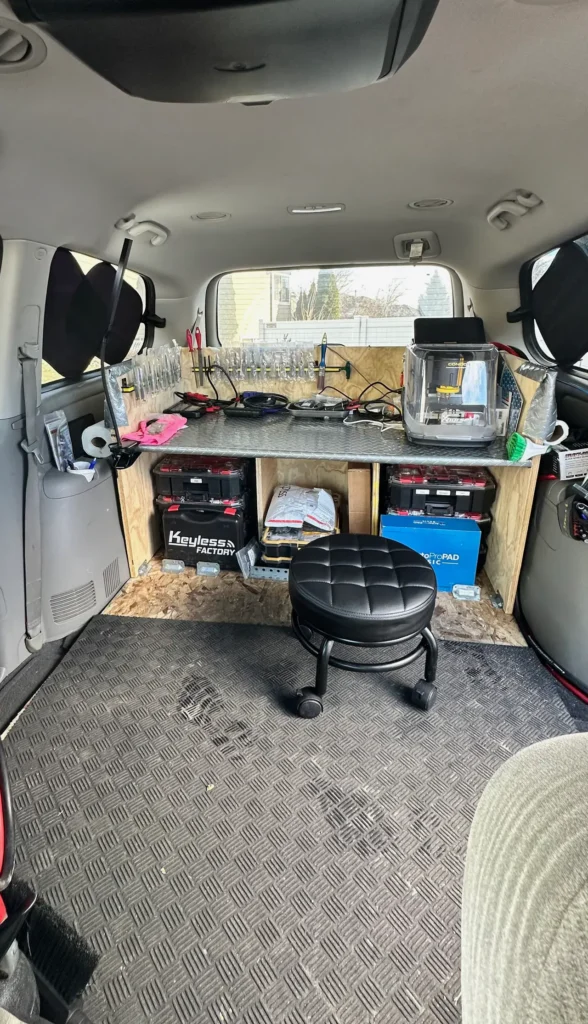
Mobile Door Closer Service
LCN Locksmith Service in Montgomery County
Call (240) 980-1647 for LCN locksmith service when your door slams or fails to close. We come to your door for door closer services, addressing the closing hardware separately from the lock that secures the opening.
- Mobile service throughout Montgomery County
- Open 24 hours a day, 7 days a week
- English and Spanish spoken
- At least a 6-month warranty on parts and labor
Get a fast quote
LCN Locksmith Service Starts With Identifying the Door Closer
LCN makes door closers and door control equipment—the hardware that controls how a door opens and closes. You commonly see its products on commercial entrances, office doors, and shared building doors. A closer controls door movement; the separate latch, cylinder, or access system controls whether the door stays secured.
That distinction matters when you request service. A slamming door points toward a different problem than a key that will not turn, while a door that will not latch can involve alignment, closing action, or the latch itself. For a change in who has access, our lock rekeying service concerns the keyed lock, rather than the LCN closer.
Common LCN Door Closers and Operators
Surface-Mounted Door Closers
These closers have a visible body attached to the door or frame, with an arm connecting the two. For a replacement, the mounting position, door dimensions, and existing attachment points matter alongside the LCN name.
Concealed Door Closers
Concealed closers place the main mechanism inside the door or frame, leaving less hardware visible. Identifying the existing installation matters because the available space and connection to the door limit replacement choices.
Automatic Door Operators
LCN automatic operators provide powered assistance to open a door, often following activation from a wall-mounted control. Report whether the door fails to open, stops during travel, or has trouble closing; each symptom concerns a different part of its operation.
Electrically Controlled Hold-Open Closers
These products combine controlled closing with an electrically operated hold-open function. A door that no longer stays open presents a different issue from one that slams after release, so describe both the holding action and the closing movement.
Need help now? (240) 980-1647
Find the LCN Name on the Closing Hardware
Look for the LCN name on the closer body, its cover, or an operator housing above the door. On a surface-mounted closer, follow the visible arm to the main body; concealed hardware is harder to identify without access to its label. The name on your key alone does not identify the closer, and a nearby keypad can belong to a separate access control system. Describe where you see the LCN marking and which part of the door is causing trouble, without removing covers or adjusting the hardware.
Where LCN Door Control Fits Shared Entrances
Rental Building Common Entrances
A shared entrance needs controlled closing so the door can return to its latched position after someone passes through. Distinguish a door that remains partly open from one that closes completely but does not lock; the closer and locking hardware have separate jobs.
Office Doors and Corridors
An office door needs closing force suited to the opening without making everyday passage unnecessarily difficult. Report resistance during opening separately from fast closing, because those symptoms do not describe the same adjustment or mechanical problem.
Storefront Entry Doors
A storefront closer controls the entrance door as customers enter and leave. Scraping, an uneven gap, or a latch that misses its strike also points toward door alignment, so replacing the closer alone does not address every closing problem.
Need help now? (240) 980-1647
LCN locks we work on
Frequently asked questions
Can you install an LCN closer on my existing door?
We offer door closer services and lock installation for existing doors. An LCN closer must suit the door’s size, weight, swing, and mounting space. Existing holes alone do not establish that a replacement fits, and damaged mounting areas need attention before hardware can attach securely.
Can all doors with LCN closers use the same key?
The LCN closers do not determine which key opens those doors; the separate lock cylinders do. Matching doors to one key requires compatible keyed hardware. Identify which doors you want included and whether you also need certain doors to remain on a separate key.
Can you rekey my LCN hardware without replacing the closer?
Rekeying changes the working key for a lock cylinder, while an LCN door closer controls movement and has no access-key cylinder to rekey. We offer lock rekeying for the separate keyed lock on the door. A change of key does not itself require replacement of a functioning closer.
What should I do if the keypad beside my LCN door stops responding?
Check the brand name on the keypad separately from the LCN marking on the closer or operator. Tell us whether the keypad is dark, rejects an entry, or accepts it while the door stays secured. We offer access control system services; identifying the keypad and the door’s behavior helps distinguish an access problem from a closing problem.
Why does my key stick or refuse to turn on a door with an LCN closer?
The key operates the separate lock cylinder, so an LCN marking on the closer does not identify the source of the sticking. Stop forcing the key and report whether the door also scrapes, sits unevenly, or fails to latch. We offer lock repair, door repair, and broken key extraction for these distinct problems.
Get Help With Your LCN Door
Request service with your location, the LCN marking you can see, and whether the problem involves opening, closing, latching, or turning the key.