
Rekey or Replace Locks After Buying a Montgomery County Home?
To rekey or change locks in a new Montgomery County home, rekey working locks when you only need to cancel old keys; replace a lock when it is damaged, unreliable, or unsuitable. Call a locksmith before moving in if you cannot verify every exterior lock or need the work done on site.
Need help now? (240) 980-1647
Rekey or Change Locks in a New Montgomery County Home?
Rekeying changes the lock’s internal key configuration so old keys no longer operate it, while keeping the existing lock hardware. Replacing removes the existing lock and installs different hardware. Both can address uncertainty about who still has keys, but only replacement addresses worn, damaged, or unwanted hardware.
Choose rekeying for sound, compatible locks
This is a fit when the lock works smoothly, you want to keep its existing hardware, and you need old keys to stop working. It can also make compatible locks operate with one key; have the locksmith confirm compatibility before planning on that.
Choose replacement for damaged or unsuitable locks
A replacement makes sense when a lock sticks, has visible damage, or you want a different style or function. It may also be necessary when the existing lock cannot be rekeyed or is not compatible with the keys you want to use.
Use both when the doors call for different solutions
A home may have a sound front-door lock worth rekeying and a damaged side-door lock that needs replacement. Decide door by door rather than assuming every lock needs the same work.
Check These Locks Before You Settle on a New-Home Plan
Make a door-by-door list before arranging work. Include every exterior entry and any separate lock you rely on, such as a door between the house and garage; do not assume that locks that look alike use the same key.
- Record each entry — List the front, back, side, and garage-entry doors, then note how many separate locks each door has. Mark any door you cannot test or inspect.
- Test the lock with its current key — From inside and outside, check whether the key turns without forcing it and whether the latch moves freely. A key that sticks or a latch that fails to line up may point to a repair or replacement issue, not just a need to rekey.
- Look for signs of wear or damage — Note loose hardware, a damaged keyway, a misaligned latch, or a door that does not close properly. A new key configuration will not fix a door or lock that does not operate correctly.
- Check your authority before changing hardware — If you rent, ask the property owner or manager before changing locks. Keep removed parts and follow your rental agreement about access and providing keys.
- Ask about compatible locks and one-key use — If you want one key for multiple doors, list the locks you want included. A locksmith needs to check whether their lock types and keyways can work together before promising that arrangement.
Follow These Steps Before Rekeying a Lock Yourself
A do-it-yourself rekey is only sensible when you own the lock or have permission, the lock is in good working order, and the rekey kit is made for that exact lock. If you cannot match the lock to the kit or follow its instructions, stop before taking the lock apart.
- Confirm ownership and scope — Make sure you are authorized to change the lock, then identify every lock you intend to rekey. Check whether the door has more than one lock so you do not leave one operating on an old key.
- Identify the lock and its instructions — Use the lock’s manufacturer information to find the correct rekey instructions and compatible kit. Do not assume a kit fits because the lock looks similar to another one.
- Gather the kit and parts tray — Have the matching rekey kit, its written instructions, the new keys, and a small tray for parts ready. Check that the kit contains the pieces listed in its instructions before you begin.
- Keep the door secure — Choose a time when you can keep the door under your control and avoid leaving the home unsecured. If the lock is part of a shared or rental property, confirm the owner’s requirements first.
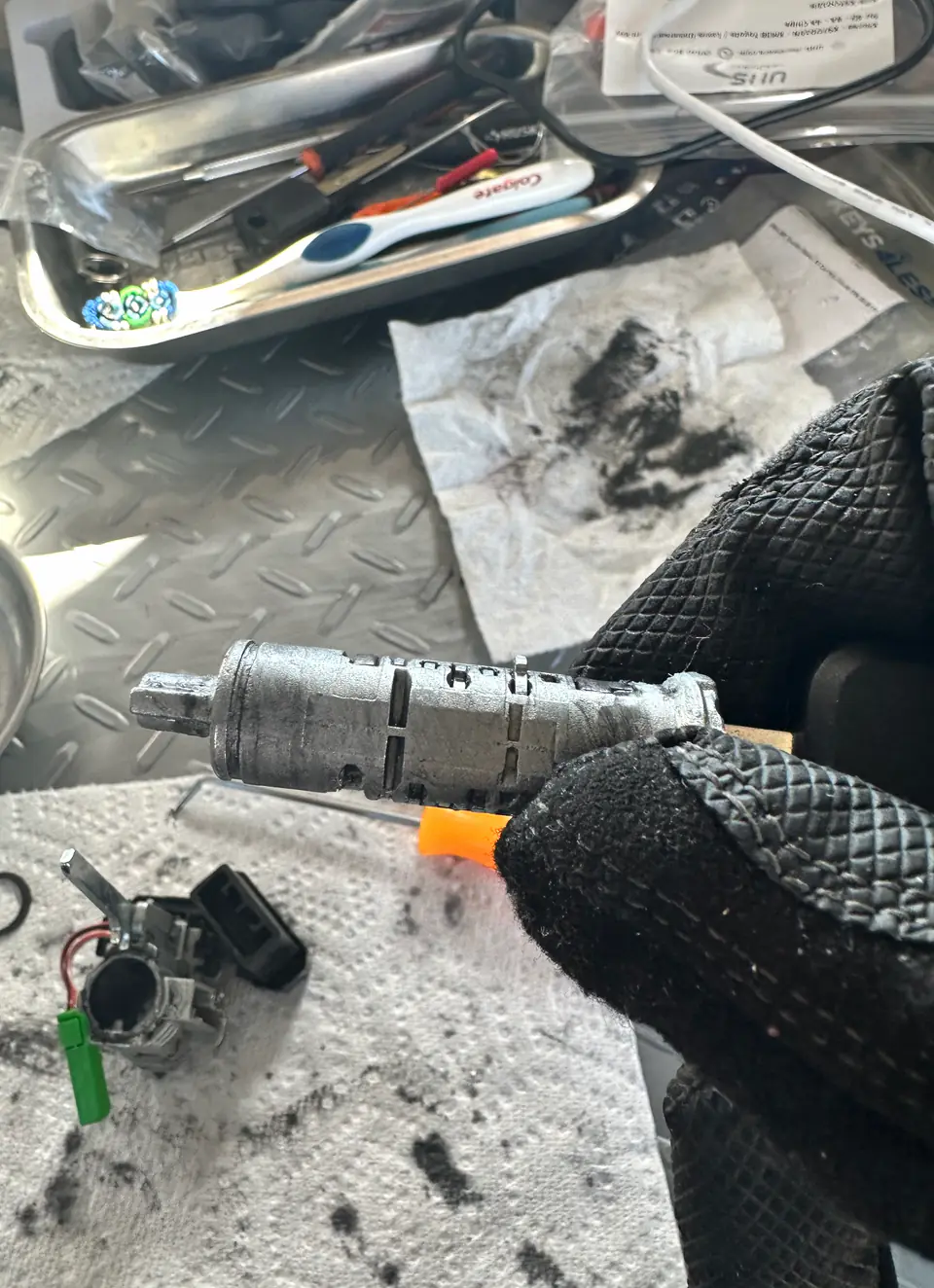
- Remove the lock parts only as directed — Follow the manufacturer’s sequence for removing the cylinder and keep each part in order. If a piece does not come free as the instructions describe, do not force it; stop and contact a locksmith.
- Match the new key using the kit instructions — Use only the supplied key and the kit’s directions to change the internal key pins. Check the parts against the guide before reassembling; do not guess at pin sizes or substitute pieces.
- Reassemble and test before closing the door — Put the cylinder and lock back together in the instructed order. Test the new key with the door open, then check that the lock and latch operate smoothly before relying on the door.
- Retire old keys and label the new ones — Keep the new keys separate from old keys and mark which doors they operate. Test every rekeyed lock with the new key; if an old key still works or the lock binds, do not treat the job as complete.
Need help now? (240) 980-1647
Know When a New-Home Lock Needs Repair or Replacement
A rekey changes which key operates a lock; it does not correct a sticking cylinder, a loose lock, a sagging door, or a latch that misses the strike plate. Test the door with it open first. If the lock works open but becomes difficult when the door is closed, the door’s alignment may be part of the problem.
Stop rather than forcing a key or turning a stiff lock harder. Forcing it can damage the key or lock and make the problem harder to diagnose. A key that will not turn, a lock that will not secure the door, or a rekey kit that does not match the lock are good reasons to contact a locksmith.
Plan Which Household Members Need Each New Key
Before work begins, decide which people need access and which doors each key should operate. Count the keys you need, include any separate entry that should remain on its own key, and keep a record of which locks were rekeyed or replaced. This makes it easier to check that the finished setup matches your plan.
Do not assume a previous owner’s key is the only copy in circulation. Rekeying is useful precisely because it changes the working key for a compatible lock; replacing the lock is an option when you also want different hardware or when the existing unit is not a suitable candidate.
Call a Locksmith When the Lock or Kit Is Unclear
A locksmith can inspect the lock, determine whether rekeying is suitable, and identify when repair or replacement is the better next step. Montgomery Locksmith Pro provides mobile service throughout Montgomery County, so we come to you. See our lock rekeying service for the work we offer.
When comparing locksmiths, ask what work they recommend for each door and whether the existing locks can be rekeyed. The Associated Locksmiths of America offers a resource for people choosing a locksmith. For help choosing front-door hardware, see our guide to front door locks locksmiths recommend.
Need help now? (240) 980-1647
Finish the Lock Check Before Moving Into Your Montgomery County Home
Before move-in day, confirm that each exterior door locks and latches properly, that every intended new key works, and that old keys no longer operate locks you had rekeyed. If a door still sticks or a key behaves differently from the others, note the specific lock instead of forcing it or assuming the change worked.
Montgomery Locksmith Pro is open 24 hours a day, 7 days a week and serves Montgomery County as a mobile locksmith. If a lock needs professional attention, contact us to arrange service at your home.
Frequently asked questions
Should I rekey a new home before moving in?
Rekey working exterior locks before you rely on them if you cannot confirm who may still have copies of the old keys. Check each entry separately, including any garage-entry door, because one lock’s new key does not change a different lock.
Can every lock in a new house be rekeyed?
No. Rekeying depends on the lock’s design, condition, and compatibility with the rekeying method. A locksmith can inspect a lock that is damaged, unfamiliar, or not covered by the kit instructions and tell you whether replacement is needed.
Does rekeying change the lock hardware?
No. Rekeying changes the internal key configuration while keeping the existing lock hardware. Choose replacement if the lock is damaged or you want different hardware.
What should I do if a new key sticks after rekeying?
Do not force the key or close the door and assume the lock is ready to use. Test the lock with the door open, check the reassembly against the kit instructions, and contact a locksmith if the key still sticks or the lock does not operate smoothly.
Secure Your New Home
Call Montgomery Locksmith Pro at (240) 980-1647 for mobile lock rekeying service in Montgomery County.