
Control Your Door’s Closing
Door Closer Services in Silver Spring & Montgomery County
Call (240) 980-1647 for door closer services in Silver Spring when your door slams, closes too slowly, or misses the latch. We check the closer, mounting, and door movement to identify what needs adjustment, repair, or replacement.
- Licensed and insured
- At least a 6-month parts and labor warranty
- English and Spanish spoken
Get a fast quote
Door Closer Problems That Cause Slamming or Missed Latches
The door slams behind you
A door that closes hard needs its closing action checked before repeated impacts damage the surrounding hardware. We examine the closer and watch the door through its full movement to locate where control is lost.
The door stops before it latches
A door can appear closed while the latch remains outside the strike. We check the final closing movement along with door alignment, because adjusting the closer alone may leave the underlying obstruction in place.
The door takes too long to close
A door that lingers open leaves you waiting to see whether it will shut. We check whether the closer controls the movement consistently and whether rubbing or another obstruction slows the door.
The closer or arm moves at its mounting
Movement where the closer attaches to the door or frame calls for an inspection of the mounting points. We check the attachment and surrounding surface before deciding whether tightening, repair, or replacement addresses the problem.
You see fluid around the closer
Visible fluid can signal a leak that affects the closer’s ability to control the door. We inspect the source and closing action rather than treating a speed adjustment as the complete repair.
A replacement door needs a closer
Door closer installation requires checking the door, frame, mounting space, and intended use together. We assess those conditions before selecting the installation approach, including whether existing mounting points remain usable.
Door Closer Service Checks the Hardware and the Door Together
The closer controls movement, but hinges, alignment, and latch contact also affect whether a door shuts properly. We inspect those related conditions so the work addresses the cause of the closing problem.
- Closing movement assessment — We observe the door from its open position through closing, noting sudden acceleration, hesitation, rubbing, or stopping before the frame.
- Door closer adjustment — We assess the closer’s available adjustments and condition before changing its closing action, then test whether the change improves control.
- Arm and mounting inspection — We examine the closer body, arm connections, and attachment points for looseness or damage that could affect operation.
- Door closer repair assessment — We identify whether the problem involves an attachment, a damaged component, or the closer itself before determining the repair scope.
- Replacement and installation assessment — We check the door and frame configuration, available mounting area, and existing hardware before determining what a replacement installation requires.
- Latch and frame contact check — We check whether the door reaches the frame cleanly and whether the latch engages instead of resting against the strike.
- Testing after the work — We operate the door through repeated closing cycles to check movement and latching after an adjustment, repair, or installation.
Need help now? (240) 980-1647
From a Door Closer Symptom to a Tested Repair
- Describe what the door does — When you call, give the service address and describe whether the door slams, stalls, rubs, or fails to latch. Mention visible leakage, loose hardware, or a recent change to the door so we know which symptoms need attention.
- Let us observe the complete closing cycle — Keep the doorway accessible for inspection. We watch the door move, inspect the closer and mounting, and check for contact with the frame or floor before deciding whether the closer is the main cause.
- Match the work to the identified problem — We determine whether the job requires adjustment, repair, installation, or attention to related door hardware. A loose attachment and a leaking closer require different work, so the inspection establishes the scope before changes begin.
- Check closing control and latch engagement — After the work, we test the door through multiple cycles and observe its final movement into the frame. We check both the closing action and latch engagement, since a slower door still needs to close completely.
What Affects the Cost of Door Closer Repair or Installation?
The condition of the existing closer and the work needed at the door determine the scope. An adjustment involves different work from replacing a leaking closer, repairing damaged mounting points, or installing hardware where no closer is present.
Door and frame condition also matter. Rubbing, loose hinges, or latch misalignment can require work beyond the closer itself. Request a quote with the door’s symptoms and whether it already has a closer; those details help us identify what needs inspection.
Need help now? (240) 980-1647
Mobile Door Closer Service Throughout Montgomery County
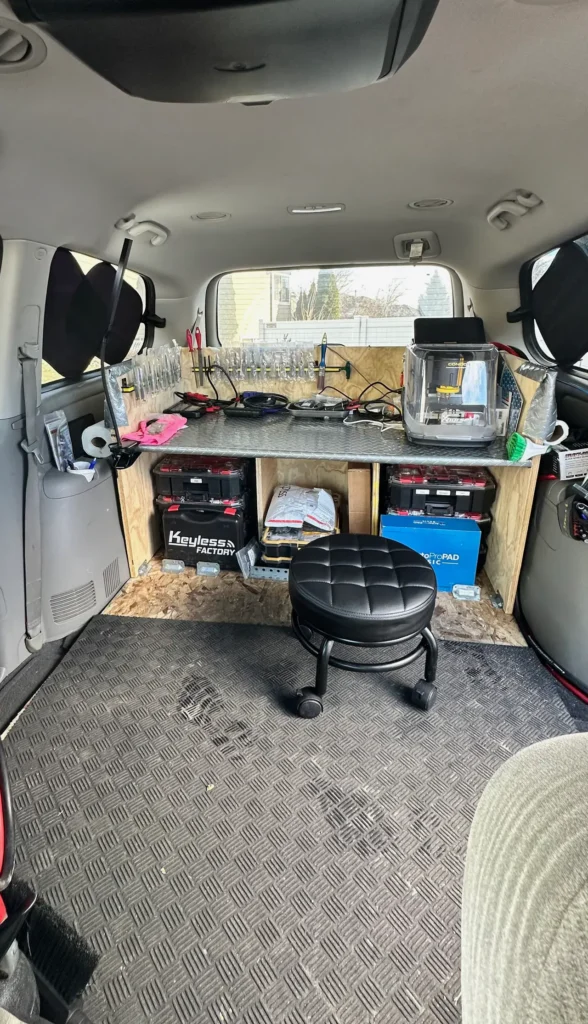
Choose Montgomery Locksmith Pro when you need a locksmith in Silver Spring who checks the closer alongside the door’s alignment and latch. We come to your property anywhere in Montgomery County, so the hardware can be assessed where the problem occurs. Kenneth Marshall has 19 years of experience in locksmith services, and our offered services also include door repair, lock repair, and door closer services.
Door Closer Services near you
Local pages for door closer services in the cities we serve:
Guides on door closer services
Frequently asked questions
Does a slamming door always need a new closer?
A slamming door does not always require replacement. We first check the closer’s condition, mounting, and closing action to determine whether adjustment or repair can address the problem. Leakage or damage can change which work is appropriate.
Can you check a door closer when the door closes but will not latch?
Yes. We check the final closing movement and whether the latch meets the strike correctly. The door may need attention to alignment or related hardware as well as the closer.
What should I do before you arrive to inspect the door closer?
Keep the doorway clear and make sure we can access the door and its hardware. Note whether the problem happens every time or only under certain conditions. Leave leaking, loose, or damaged closer hardware undisturbed for inspection.
Can you inspect a closer that became difficult to use after door repairs?
Yes. Tell us what changed and whether the difficulty began immediately afterward. We check the door’s movement, mounting, and frame contact to see how the repaired door and existing closer now work together.
Can you install a closer on a door that does not have one?
We assess new closer installations by checking the door, frame, and available mounting space. Existing hardware and the condition of the attachment surfaces help determine the installation requirements. Identify the door and its current hardware when requesting service.
How do you check whether the door closer work solved the problem?
We operate the door repeatedly after the work and watch for controlled movement through the closing cycle. We also check that the door reaches the frame and the latch engages. A door that moves smoothly but stops short still needs attention.
Get Your Door’s Closing Problem Checked
Call (240) 980-1647 with your address and the symptom: slamming, slow closing, leakage, or a missed latch.